Whatever you're building, we're here to help you take the first step with confidence.
We are a remote first consulting company that specializes in the cleaning industry!
What we offer:
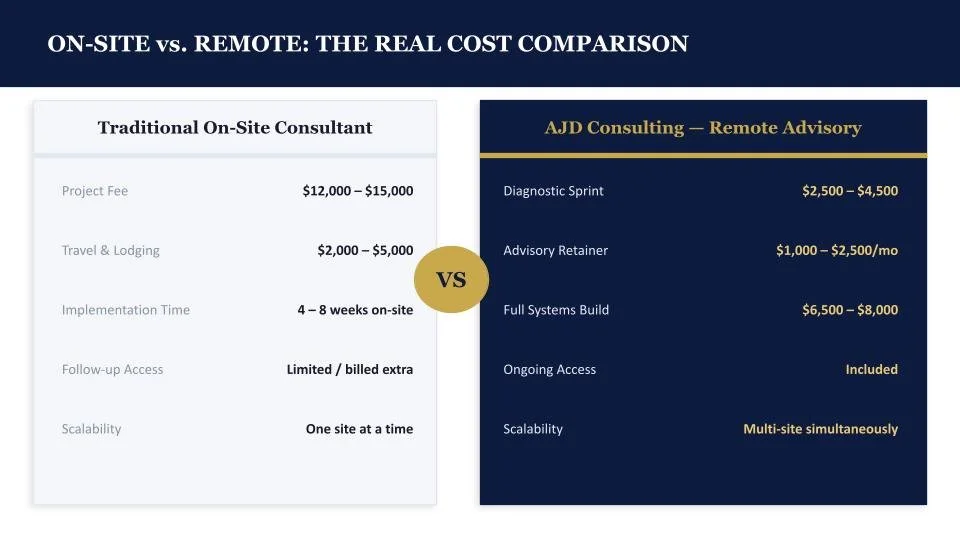
No overhead costs
Direct support to frontline leaders and decision making leaders in your organization.
Coaching sessions to support the leaders in the field with conflict resolution, quality assurance guidance.
Problem solving coverage for call outs, planned time off for your organization. The AJD approach is an in-depth analysis to support you!
Staffing calculators to staff sites
Executive level dashboards to have a real pulse on your organization.
What is a Diagnostic Sprint?
A diagnostic sprint is a 3 tier program support system built by 18+ years of real world cleaning industry experience. We support public and private organizations. We work together to build the package with YOUR goals.
The Operational Breakdown
Most cleaning and custodial programs fail for predictable, systemic reasons—not isolated performance issues.
Across facilities, schools, and commercial environments, we consistently see the same operational breakdowns:
Inconsistent cleaning standards across shifts and sites
Staffing models that are not aligned to building demand
No structured accountability or inspection enforcement system
Reactive floor care instead of lifecycle-based maintenance planning
Limited training systems for frontline cleaners
These are not isolated issues. They are symptoms of missing operational systems.
Why This Matters to Your Operation
1. Rising Operational Costs
When staffing and workflows are not optimized, labor hours are consumed inefficiently and maintenance becomes reactive rather than planned.
Impact:
Increased overtime and labor inefficiency
Excessive chemical and supply usage
Accelerated capital replacement cycles for floors and finishes
2. Declining Facility Asset Life
Inconsistent cleaning execution and lack of preventive floor care systems accelerate surface degradation across high-traffic areas.
Impact:
Shortened floor finish and flooring lifecycle
Increased frequency of deep cleaning and restoration cycles
Higher long-term capital and renovation costs
3. Lower Workforce Stability and Performance
When expectations are unclear and training is inconsistent, frontline cleaners operate without a standardized method of success.
Impact:
Higher turnover and reduced retention
Loss of institutional knowledge between shifts
Increased supervisory burden and corrective intervention
4. Elevated Compliance and Reputation Risk
Without structured accountability systems, performance varies widely across teams, increasing exposure to missed standards and inspection failures.
Impact:
Inconsistent inspection outcomes
Increased health, safety, and compliance risk exposure
Reduced confidence from occupants, administrators, or stakeholders
Our Services